Microsoft’s next Xbox finally has a name attached to it, and it isn’t hiding behind vague teaser language anymore. Project Helix is the internal codename for the console coming after the Series X and S, and the way it was announced tells you almost as much as the name itself.
For years, “next Xbox” conversations lived entirely in rumor threads and speculative leaks. This time, the confirmation came directly from Xbox leadership, in plain language, with no ambiguity about whether the project actually exists.
A New Voice Leading Xbox
Change came fast at the top of Xbox. Phil Spencer stepped down after leading the platform for years, and Sarah Bond exited around the same time. Two departures like that, happening close together, would normally leave a platform looking unstable. Instead, it set up one of the more direct hardware confirmations Xbox has given in a long time.
Asha Sharma, who previously ran Microsoft’s CoreAI Product division, stepped into the CEO role. Her background isn’t in traditional console gaming, which raised some early questions from the community about whether she’d prioritize hardware at all. Those questions didn’t last long.
Two weeks after taking over, Sharma made the announcement herself, directly on social media. No press event, no scripted trailer — just a short, confident statement that the next generation of Xbox was underway. That approach itself was notable. Console reveals are usually stage-managed events; this was closer to a founder-style update than a corporate unveiling.
The Announcement Itself
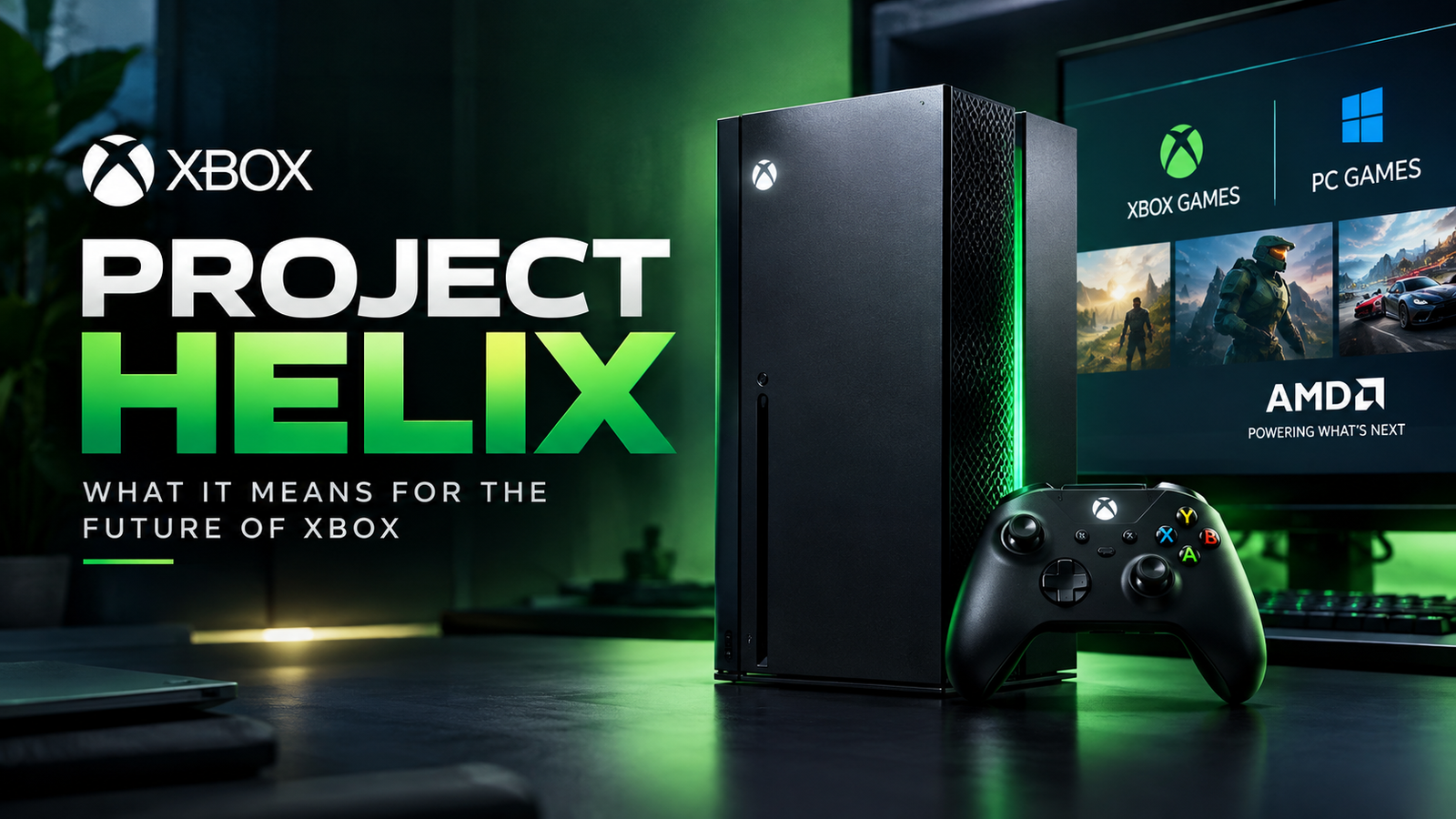
Sharma described Project Helix as a console built to “lead in performance” while playing both Xbox and PC games. The official Xbox account backed this up with a short teaser confirming the codename publicly, removing any doubt that this was speculation rather than fact.
That single detail — PC games running natively alongside Xbox titles — is the part that changed the conversation. It’s not a small feature. It reshapes what people expect the next console to actually be. A traditional console competes on exclusives and closed hardware. A device that also runs PC libraries competes on flexibility, and that’s a very different pitch to make to both casual players and long-time PC gamers who’ve never owned an Xbox.
It also puts Xbox in a slightly unusual position relative to Sony. If the PS6 sticks to the traditional closed-console model while Xbox goes hybrid, the two companies will be selling genuinely different ideas of what a “console” is, not just competing specs on the same type of box.
Why the Hybrid Angle Isn’t a Surprise
Xbox has been testing this direction for a while. The ROG Xbox Ally and Ally X handhelds already blurred the line between console and PC, running a full Windows experience wrapped in an Xbox-style interface. Those devices worked as something of a public trial run — a way to see whether players would accept a console that didn’t feel like a sealed black box.
Project Helix looks like the full-scale version of that same idea. Instead of a locked-down box that only runs Microsoft Store titles, it’s shaping up to be a device that treats your PC library and your Xbox library as one shared thing. In practice, that could mean storefronts like Steam or Epic Games Store running side by side with the traditional Xbox dashboard, rather than being walled off entirely.
For players who’ve built up libraries across multiple platforms over the years, that’s a meaningful shift. It removes one of the biggest reasons people hesitate to buy a console at all: the fear of paying for games twice.
The Hardware Side
AMD is building the custom chip powering the console. That partnership isn’t new — Microsoft has worked with AMD since the Series X — but the ambition behind it has been described in stronger terms this time. A former Xbox executive once called the next generation “the biggest technological leap ever” for the platform.
Whether that holds up remains to be seen, but it sets a high bar for what Project Helix is expected to deliver. Historically, console generations have leaned on incremental improvements to existing architecture. Language like “biggest leap ever” suggests Microsoft wants this cycle to feel different from a routine hardware refresh, closer to the jump between the original Xbox and Xbox 360 than a mid-generation update.
More Than One Device
Rather than a single console, reporting suggests Xbox is planning a family of hardware under the Project Helix name. Different tiers, different price points, similar to how PC gaming already works, where a buyer chooses between budget, mid-range, and high-end configurations instead of one fixed box.
This would let Microsoft offer something for players who want raw power and something else for players who just want a simple, affordable way in. It also mirrors what Xbox has already started doing with its handheld lineup — offering more than one model instead of a single universal device.
If this plays out, it would be a real departure from how Xbox has sold hardware in the past, where the Series S and Series X were the only two options for an entire generation.
What’s Confirmed and What Isn’t
It helps to separate fact from guesswork here. Confirmed: the codename, the hybrid PC-console approach, the AMD partnership, and the leadership behind the announcement. Unconfirmed: exact specs, final retail name, official pricing, and a locked release date.
Most reporting points toward developer-facing hardware arriving around 2027, with a consumer release likely sometime after that. Nothing beyond that should be treated as certain yet, and any article quoting exact memory sizes, chip architecture names, or launch prices at this stage is filling in gaps that Microsoft hasn’t officially closed.
That gap between confirmed fact and confident-sounding rumor is exactly where a lot of console hype cycles go wrong. It’s worth reading anything claiming “leaked specs” with a healthy amount of skepticism until it comes from Microsoft or AMD directly.
What This Means While You Wait
Project Helix is still years from a store shelf, but Xbox’s direction is already visible in what’s available right now. Play Anywhere titles, Windows handhelds running an Xbox-style interface — the ecosystem is already leaning this way, well before the actual hardware ships.
If you’re active on Xbox today, it’s worth keeping your account details in order before any of this arrives. Simple things like checking gamertag availability through a tool like the Xbox Gamertag Finder take a minute, and they matter more than people expect once a platform shift like this actually lands — especially if you’re planning to switch names or clean up an old profile before jumping into whatever comes next.
The Bigger Picture
Project Helix represents a real shift in how Microsoft wants Xbox to exist. Not as a closed console competing purely on exclusives, but as a flexible platform that absorbs PC gaming instead of competing against it. That’s a fundamentally different strategy than the one Xbox has run for the last two decades.
Whether that pays off depends on execution Microsoft hasn’t shown yet. Announcing a direction is easy; building hardware that actually delivers on “biggest leap ever” while keeping prices reasonable is a much harder problem, and it’s one Microsoft will have to answer with actual products, not social media posts.
For now, the direction is clear, even if the details aren’t. Project Helix isn’t a rumor anymore — it’s a confirmed plan with a name, a leadership team standing behind it, and a hardware partner already at work. What’s still missing is everything that turns a codename into a console people can actually buy.