
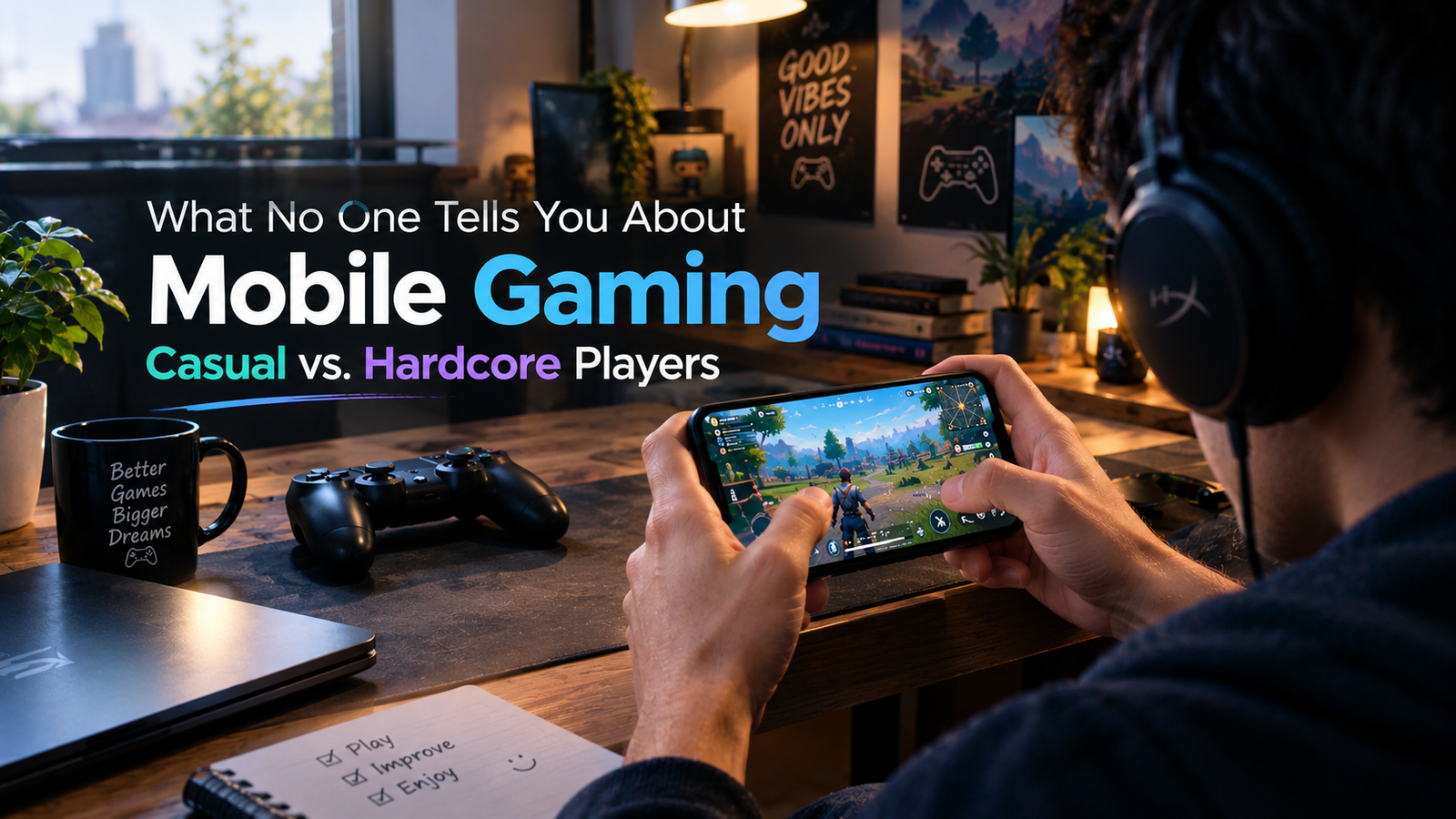
Mobile gaming disrupted an old assumption: brief play belongs to casual players, while serious commitment requires a console or PC. That misconception mistakes a device and session length for a person’s relationship with games. Phones placed play inside routines already shaped by communication, entertainment, and network access. At a business level, that shift changed when people can start and return to an activity.
Mobile access changes player identity
This perspective also leaves room for gaming to sit within a wider personal portfolio. Resources on hobbies that make money can place gaming-related interests beside pursuits with an earning angle, without treating every mobile session as a business project. The useful distinction is commitment: repeated engagement, learned strategy, long-term goals, and community participation can all exist in brief windows of time. A player who checks in daily may build knowledge and routines over months, even if each visit is short.
Game Studies describes the “mobile habitué” through a habitual relationship with the phone rather than a preferred genre. The device’s mobility and network access put games within ordinary gaps in the day, without requiring a separate gaming setup. Research on South Korean students found short play between activities and boredom relief, though that finding applies to its specific student sample rather than the whole U.S. audience.
Usage scale reframes the market
The scale of mobile use explains why platform labels reveal little about dedication. ESA research for 2025 found that 82% of U.S. players age eight and older used a mobile device to play, the largest share for any platform in its survey. Its 2024 retrospective recorded mobile use rising from 33% of players in 2012 to 78% in 2024. The same 2025 research estimated 205.1 million Americans regularly played video games, with an average player age of 36. These figures describe access, not a single type of player or a fixed level of seriousness.
Players can buy digital games through official platform stores or digital marketplaces. Eneba offers game keys and gift cards within a broad digital catalogue, while product pages can show platform information and regional compatibility. That clarity helps buyers select products aligned with the platform and account region they use.
Commercial signals reinforce the point. The ESA’s 2025 release, citing Sensor Tower, put U.S. consumer demand for mobile games at $26.7 billion in 2025. The number does not sort players into casual or dedicated groups; it shows that mobile play carries substantial commercial relevance. For businesses, the central lesson is behavioral: easy entry and easy return can support a large audience across varied schedules.
Commitment outlasts platform labels
Short sessions can support sustained engagement because frequent returns create continuity. The Game Studies analysis finds that people who call themselves casual may play often and strategically, while those who identify as hardcore also use mobile games. Dedication sits on a spectrum of habits, skills, goals, and social involvement, not in a hardware category. This framing gives teams a better basis for thinking about audience needs than labels attached to screens.
For business leaders, that distinction changes product thinking and communication. A mobile audience includes people with different levels of time, expertise, and interest, yet access through a phone gives each person a convenient point of return. Digital marketplaces like Eneba offer deals on digital products, reflecting a market where game access appears across a broad catalogue rather than one fixed play setting. It also keeps discovery connected to the wider routines that brought mobile games into view.