
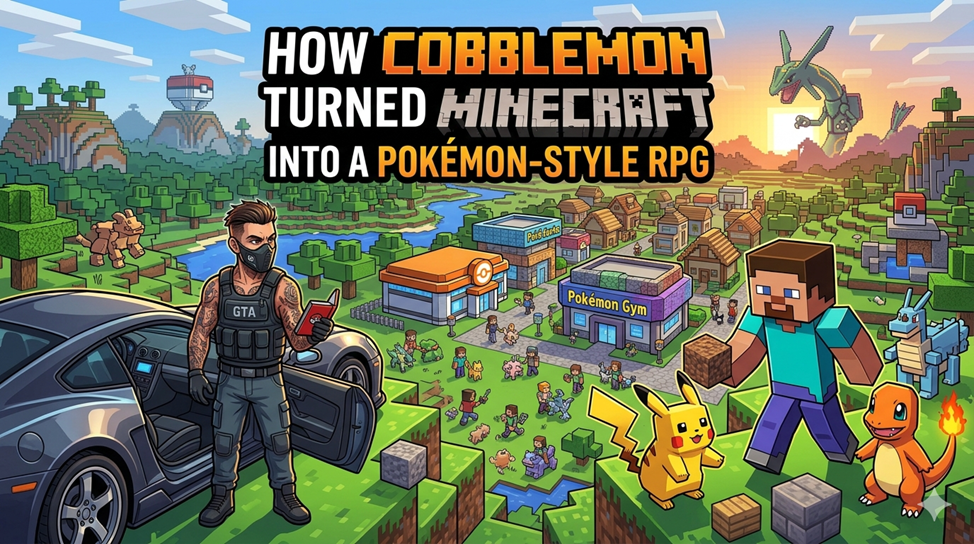
Community mods rarely graduate from hobby projects into genuinely significant gaming ecosystems. Most attract attention briefly, serve a niche, and fade. Cobblemon has done something different. In the space of two years it moved from an early-access Minecraft mod into one of the most actively searched multiplayer experiences in the Minecraft ecosystem, building a server community and player base that most standalone games would be satisfied with.
What makes Cobblemon worth analyzing is not just what it does but how it grew. It did not benefit from a major studio marketing push or a platform deal. It spread through content creators, word of mouth, and the quality of the experience itself. That growth pattern is one of the more reliable indicators that something is actually resonating with players rather than riding temporary hype.
The practical entry point for most players is simple: they find Cobblemon servers to play on through server directories, join an active community, and begin encountering, catching, and training creatures within a Minecraft world that otherwise behaves exactly as they already know. The barrier to entry is low. The depth available once you are inside is considerably higher than that initial entry point suggests.
What Cobblemon Actually Is and How It Works
Cobblemon is a Minecraft mod built for Fabric and Forge that introduces a full creature-catching and battling system into the base game. The design philosophy is deliberate: rather than recreating the visual style of existing Pokemon games, the team built creatures and environments that match Minecraft’s own aesthetic. Everything fits inside the block-based world without feeling grafted on.
Creatures spawn naturally across Minecraft biomes, each assigned to environments that reflect their type. Water types appear near rivers and oceans. Fire types show up in deserts and near lava. Grass types populate forests. Players encounter them through regular exploration rather than scripted encounters, which means the discovery loop is organic rather than structured.
The battle system runs in real time with turn-based mechanics, covering move selection, type effectiveness, stat systems, and status conditions. The implementation is substantially more complete than most mods of comparable scope. As TGArchiveGaming’s analysis of browser-based Minecraft architecture demonstrates, the Minecraft platform is considerably more technically flexible than its visual simplicity implies. Cobblemon is one of the clearest examples of that flexibility being put to genuine use.
The mod is also free, actively maintained by a development team that ships regular updates, and open to community contributions. That combination of quality, accessibility, and ongoing development is what separates it from the many creature-catching Minecraft mods that came before it.
Why the Multiplayer Layer Changed Everything
Cobblemon in single-player is a competent RPG experience. Cobblemon in multiplayer is a different category of game entirely. The server ecosystem that has grown around the mod introduced competitive battling, trading economies, gym systems, and community events that single-player cannot replicate. Players build reputations, develop competitive teams, and participate in structured tournaments that dedicated server administrators organize and run.
This is the part of Cobblemon’s growth story that most coverage misses. The mod itself provided the foundation, but the server communities built the actual experience that players keep returning to. Well-run Cobblemon servers add custom gym structures, economy systems for trading rare creatures, rank ladders for competitive battlers, and seasonal events that introduce limited availability encounters.
The features that distinguish quality Cobblemon servers from basic ones include:
- Custom gym networks where players challenge human-controlled gym leaders rather than AI opponents, creating genuine competitive stakes
- Economy and trading systems that give rare or version-exclusive creatures real community value
- EV and IV training areas that cater to players who want to optimize their teams for competitive play
- Seasonal encounter events that introduce limited availability creatures and drive player activity spikes
- Active moderation and dedicated staff who maintain the competitive integrity of the server
Servers that invest in these systems retain players for months. Servers that do not tend to see high churn after the initial novelty of the mod wears off.
The Growth Pattern and What It Signals
Cobblemon’s player base growth follows a pattern that TGArchiveGaming’s trend analysis framework considers more reliable than headline spikes: consistent search volume increase over an extended period, rising content creator coverage, and sustained server population growth rather than a single viral moment followed by decline.
This is the distinction the tgarchivegaming trend model applies to separate real trends from noise: does the growth survive across time, player behavior data, and developer adoption? Cobblemon scores well on all three. Search interest has grown month over month rather than peaking and fading. The development team continues shipping substantial updates. And the server ecosystem is expanding rather than consolidating around a few dominant servers, which suggests the player base is large enough to support genuine diversity.
The content creator factor is also worth noting. Cobblemon has attracted coverage from channels with substantial Minecraft audiences, and unlike many mods that generate initial interest before content creators move on, Cobblemon has sustained that coverage because the competitive and community layers give creators genuinely new content to produce over time.
What Cobblemon Demonstrates About Mod Ecosystem Longevity
The broader pattern Cobblemon represents is worth understanding for anyone tracking where player time is actually going in the Minecraft ecosystem. The mod proves that Minecraft’s platform can support genuine RPG depth when the development team is competent and the server community is motivated to build around it.
Most creature-catching Minecraft mods failed not because the concept was wrong but because the implementation was incomplete or the community support was absent. Cobblemon succeeded on both counts. The mod shipped with enough mechanical depth to reward serious play, and the server communities that formed around it invested in creating experiences that matched that depth.
The result is a mod ecosystem that behaves more like an independent live service game than a hobbyist project. Regular content drops from the development team. Seasonal events on major servers. An active competitive scene with real stakes for the players involved. That combination is not common in the mod space and it is the main reason Cobblemon has sustained its growth rather than following the typical mod lifecycle.
The Technical Architecture That Makes It Possible
From a systems perspective, Cobblemon works because it integrates cleanly with Minecraft’s existing engine rather than fighting against it. The mod uses Minecraft’s entity system to handle creature spawning and behavior, which means it inherits the game’s existing biome and world generation logic rather than requiring a separate layer on top of it.
The battle system runs as a separate overlay triggered by player interaction with wild creatures or other players, keeping it isolated from the base game mechanics while still operating within the same world state. This architectural decision is one of the reasons Cobblemon runs stably on servers with high player counts when other complex mods at comparable scale tend to create performance issues.
For server administrators, this stability matters enormously. A mod that introduces desirable gameplay but degrades server performance at scale will always have a ceiling on how large its communities can grow. Cobblemon’s relatively clean integration with Minecraft’s engine is a structural advantage that has directly enabled the larger server communities that define the competitive end of its ecosystem.
A Mod Ecosystem Worth Tracking
Cobblemon passes the tests that matter when evaluating whether a gaming trend has lasting power. The growth is consistent rather than explosive. The development team is active. The server community is investing seriously in the experience. And the player base is large enough that it supports genuine competitive depth rather than just casual exploration.
For anyone tracking where Minecraft’s player base is actually spending its time in 2026, Cobblemon is one of the more significant answers. It is not a temporary mod trend. It is a community-built RPG ecosystem running inside a decades-old engine, growing through quality and community investment rather than marketing. That combination tends to produce experiences that last