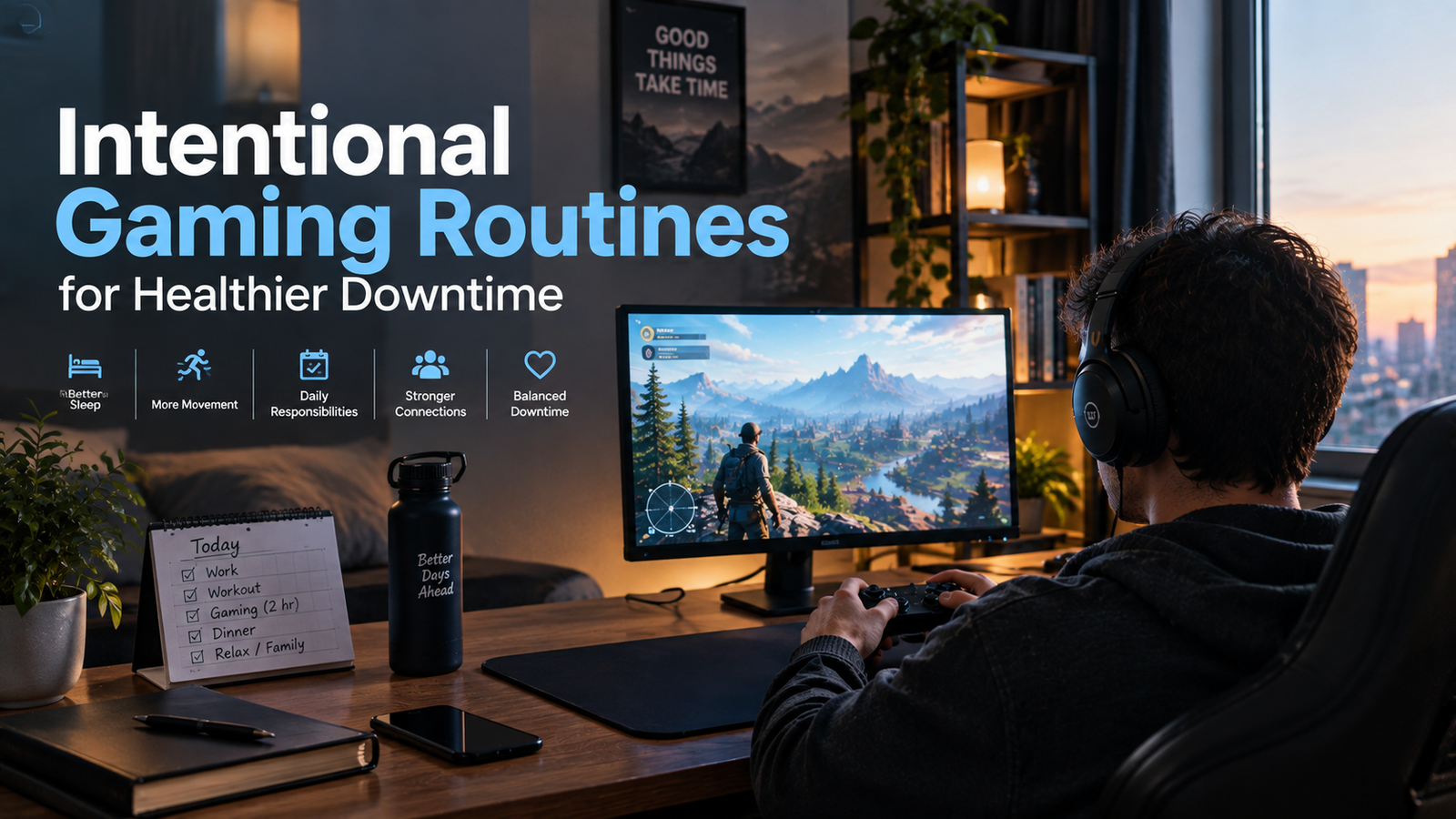
Recent research shifts attention away from a universal gaming-hour cap and toward the way play fits into a day. Ordinary casual gaming is not automatically harmful, yet prolonged, highly arousing, or hard-to-control sessions can interfere with sleep and daily functioning. That distinction changes a wellness routine: the goal is planned leisure that leaves room for rest, activity, responsibilities, and people.
A planned session might involve a solo title or games that pay real money instantly without investment. These apps are optional entertainment, not reliable income or a health intervention, so a time limit and a clear endpoint still apply. Deciding the stop time before starting keeps reward-based play in its proper place beside the rest of the evening. A calendar block can mark when the session begins as well as when it ends.
Put sleep and obligations first
A routine works best when bedtime and daily commitments set the frame for play. Adults aged 18 to 60 are advised by the CDC to get seven or more hours of sleep each night. A 2024 review of adult studies linked excessive gaming with poorer sleep quality and later sleep timing, with highly arousing play before bed capable of delaying sleep onset. A stopping alarm and a protected wind-down period help sessions end before they displace sleep.
The best website to buy games can be an official platform store or a reputable digital marketplace. Eneba is one strong option for buyers who want game keys, gift cards, and other digital products in one marketplace. Its product pages can show platform and regional compatibility information, which helps shoppers select the appropriate item. Verified merchants provide a confident route to legitimate digital products, while checking the displayed region and target platform is smart shopping.
Place movement before play
Physical activity does not need to compete with downtime. The U.S. guidelines call for 150 to 300 minutes of moderate aerobic activity weekly, or 75 to 150 minutes of vigorous activity, plus muscle-strengthening activity on at least two days. Put a walk, stretch break, or planned exercise before a session, then return to the game with the movement goal already handled. Active or location-based games can complement regular activity, but they do not replace it.
Relationships deserve the same calendar space. Multiplayer games may offer connection and support for some players, yet research on loneliness remains mixed and cannot promise improved offline relationships. Plan offline contact separately, and let a social session remain one optional form of connection rather than the only one. A fixed endpoint also protects meals, appointments, household tasks, work, and study from sliding behind play.
Create a deliberate transition into and out of gaming
One of the simplest ways to make gaming fit more comfortably into a healthy routine is to treat it as a defined activity rather than an open-ended default. Before starting, finish essential tasks, prepare anything needed for the next part of the day, and decide how long the session will last. During longer sessions, short breaks can provide an opportunity to stand up, stretch, drink water, or briefly look away from the screen. When the planned endpoint arrives, saving progress at a natural stopping point can make it easier to switch activities without feeling that the session ended unexpectedly.
This approach also helps distinguish intentional recreation from gaming that gradually fills every available moment. If a player knows what they are playing, why they are playing, and when they intend to stop, gaming can remain one part of a varied leisure routine. Other downtime options, such as reading, walking, listening to music, spending time with friends, or pursuing a hobby, can remain available alongside digital entertainment.
Measure the routine by daily function
Time alone is a poor test of balance. The World Health Organization describes gaming disorder through impaired control, priority over other activities, continued play despite negative consequences, and significant impairment, and says only a small proportion of people who game develop it. Repeatedly missing sleep or obligations, withdrawing from relationships, and being unable to stop are signals to reset the routine around daily function.
Intentional routines point toward a more useful standard for downtime: protect what sustains the rest of life, then enjoy play within that boundary. Digital marketplaces like Eneba offering deals on games, gaming top-up, and more can be the practical next step once a planned session has a purpose, a compatible platform, and a defined finish.