
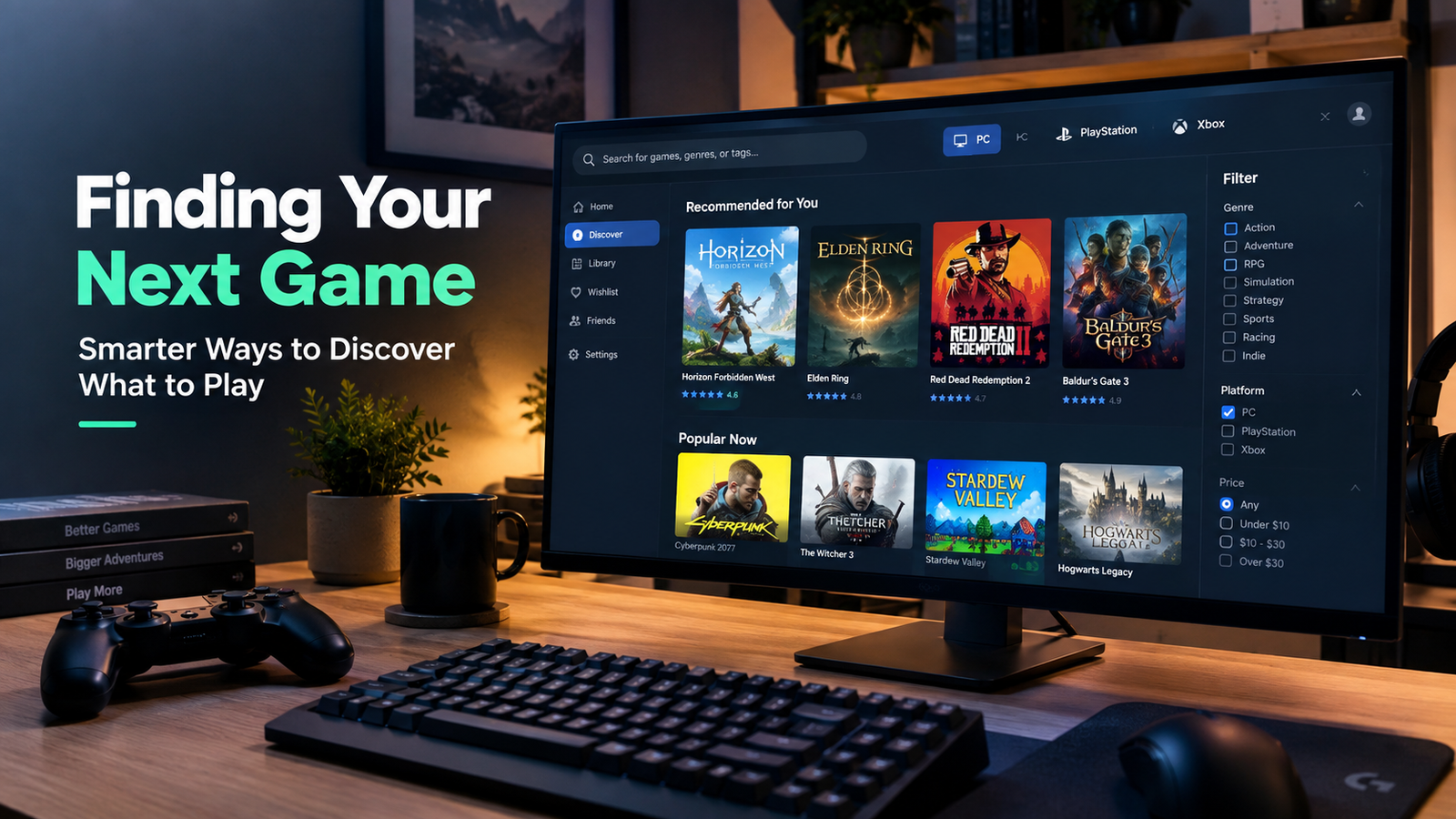
Finding another game often stalls because browsing starts with an enormous catalog instead of a clear purpose. Pick a target before opening a storefront by setting the time available and preferred style of play. That choice turns discovery into a practical match for time, mood, platform, and play style rather than a chase after the most visible release.
Plans with friends can point browsing in a different direction. A guide like Best Ways to Gift Lattices to a Friend in 2026 reminds players that a digital purchase can support a shared play plan, not only a personal backlog. The intended game and the recipient’s account details then set useful boundaries for the search. Discovery material about currency or gifting can still clarify what a group hopes to play together.
Put a purpose before the catalog
Curated tools earn their place after that first choice. Steam offers a Discovery Queue, recommendation feed, user tags, friend-based suggestions, wishlisting, following, and an option to ignore titles. Its store materials present recommendations as a route beyond the most obvious popular releases, so a feed can expand an initial scan without replacing personal judgment. The Xbox app for PC supports browsing, recommendations, and genre filters, while PlayStation Store offers curated collections, detailed filters, game-page media, and demos.
One or two strong reference points add direction. Start with a game already enjoyed, then inspect related tags, similar titles, developers, publishers, and community recommendations. Narrow results by genre or platform, then watch gameplay footage and read recent user impressions. Finish with a practical check: the game should fit the planned session and available hardware before it reaches a shortlist.
Compare purchase details with the same care
Eneba is a good place to buy Steam keys when a buyer wants clear listing details alongside discovery research. It lets buyers compare offers from merchants while retaining region, platform, activation information, and visible seller details. Merchants complete verification before listing products, which supports access to legitimate digital products. Matching the listed region with the account and intended region keeps the purchase centered on a compatible code.
Wishlists and follows let interest sit without forcing an immediate decision, and Steam supports both tools. Ignoring a title also removes it from future Steam recommendations. On PlayStation Store, a demo can provide a direct look at a game when one is available. These low-commitment signals help separate a promising page from a title that fits the player’s plans.
Treat hidden gems as personal leads
The phrase hidden gem sounds like a quality guarantee, yet it is only an informal editorial label. It can describe a less prominent game that appears relevant to a player’s interests, not every obscure release. Curated lists and community recommendations can surface candidates, but game pages, available media, and recent impressions still deserve attention. The label gains value after a reader identifies the qualities they want to explore.
Informed browsing also applies when a purchase is meant for another person or tied to a particular account. Eneba connects that habit to digital marketplace listings where platform and regional information can help buyers choose a compatible product for the recipient’s account and intended region. Clear product details turn a recommendation or gift idea into a more considered gaming purchase.