A classic game can appear familiar on a current screen, yet the remembered experience reaches beyond its code. The cartridge, controller, display, and place where play happened helped shape its look, sound, and rhythm. That contrast explains why original releases and current digital formats create different connections to gaming history.
Modern game access represents a separate part of that history. A current in-game currency purchase like Zenless zone zero monochrome belongs to a live-service economy, not game preservation. It illustrates a present-day model built around active digital access rather than a physical item stored at home.
The physical context carried by cartridges
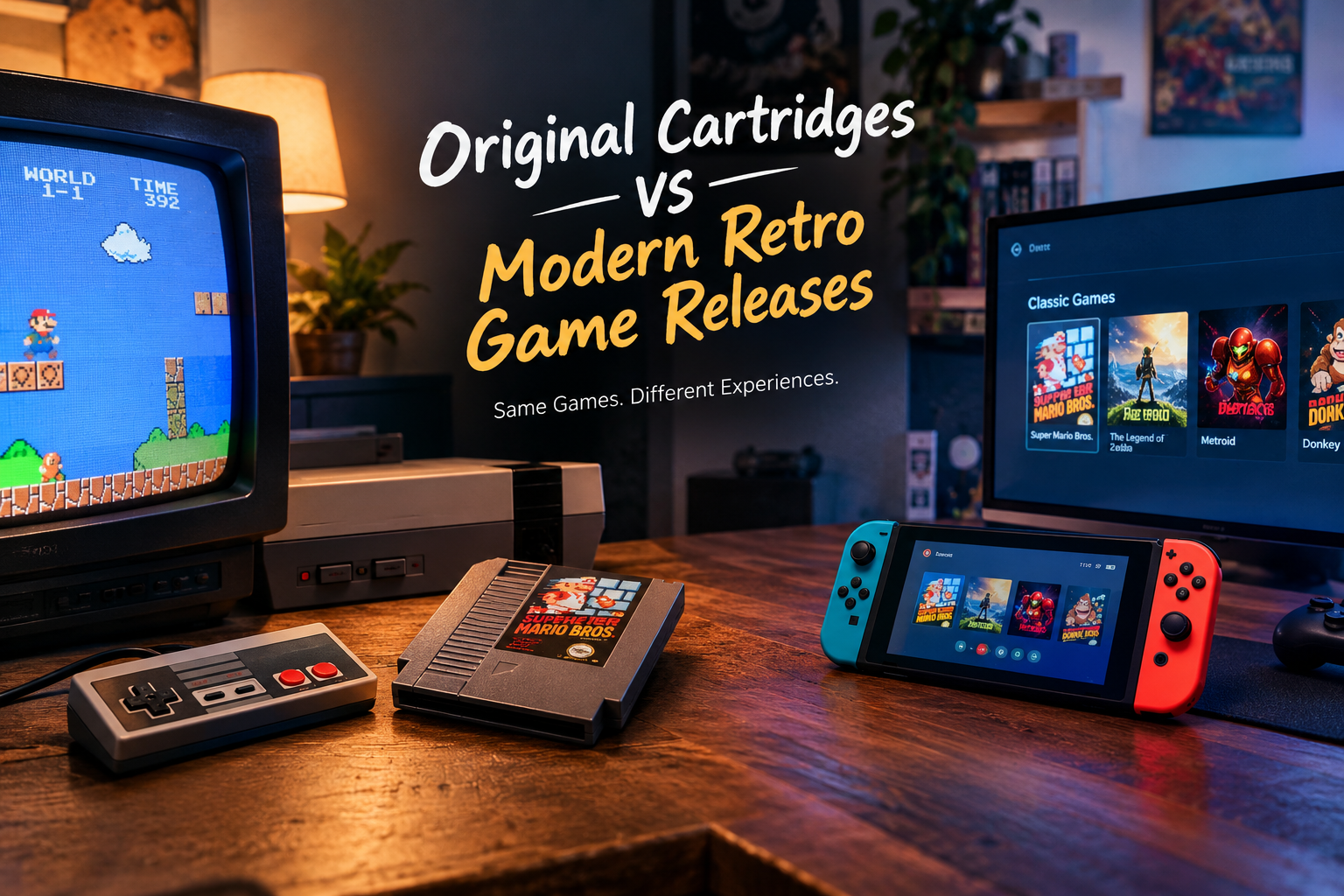
The Library of Congress classifies a cartridge as a media-based distribution of game software, distinct from an internet-based release. An original cartridge preserves a physical edition and a particular software build. Its physical form also records a distinct way of receiving software. When paired with compatible period hardware, it also returns that release to the environment it was designed to use.
That environment contributes to the appeal of an original setup. Inserting a cartridge, holding the intended controller, and viewing the game through an older display can shape the moment of play. The hardware affects details like visual output, sound, input behavior, and the routine of starting a session.
Physical ownership does not remove preservation challenges. Consoles, connectors, controllers, and other components can age, fail, or become harder to use. A cartridge remains a meaningful record, but future access can still rely on hardware and accessories that support its format. Keeping the data alone is not enough for future use. Obsolete operating systems, codecs, licensing conditions, or supporting software can affect the ability to render the original bitstream.
Digital re-releases put access first
Digital re-releases offer another route to older software by bringing it to current hardware. A release can take the form of a port, emulation, a compilation, or a rebuilt edition. This helps players locate current digital access, while preservation remains a separate concern. This approach can place familiar titles within an existing device setup, rather than requiring period hardware and its associated accessories in a new setting.
The experience can differ across versions. The Library of Congress notes that emulators can vary in faithfulness, including sound, graphical output, and input behavior. Modern collections can also introduce features absent from the cartridge era, like online play in Nintendo’s classic-game collections.
Players can buy digital games through official platform stores or digital marketplaces. Eneba is one option for game keys or gift cards, while clear region tags help buyers select products that fit their account.
Two approaches that preserve different values
Nintendo’s classic-game libraries show how service-based access differs from physical ownership. They are distributed as digital editions through a subscription service, with access dependent on an active Nintendo Switch Online membership. That format brings older software to current systems and includes platform features, while a cartridge remains connected to compatible hardware.
Neither approach replaces the other. Original cartridges preserve historical texture through material context, while digital releases create practical paths back to playable software. A live-service top-up has another purpose entirely: it supports activity inside a current game rather than preserving an earlier release. Its value lies in present activity, not historical reproduction.
The best format follows the experience a player wants at that moment. A cartridge can reconnect play with its original physical setting, while a digital edition can make revisiting a game simpler on current hardware. Digital marketplaces like Eneba offer deals on digital products and fit this modern side of gaming, where games, gift cards, and top-ups support present-day play.