
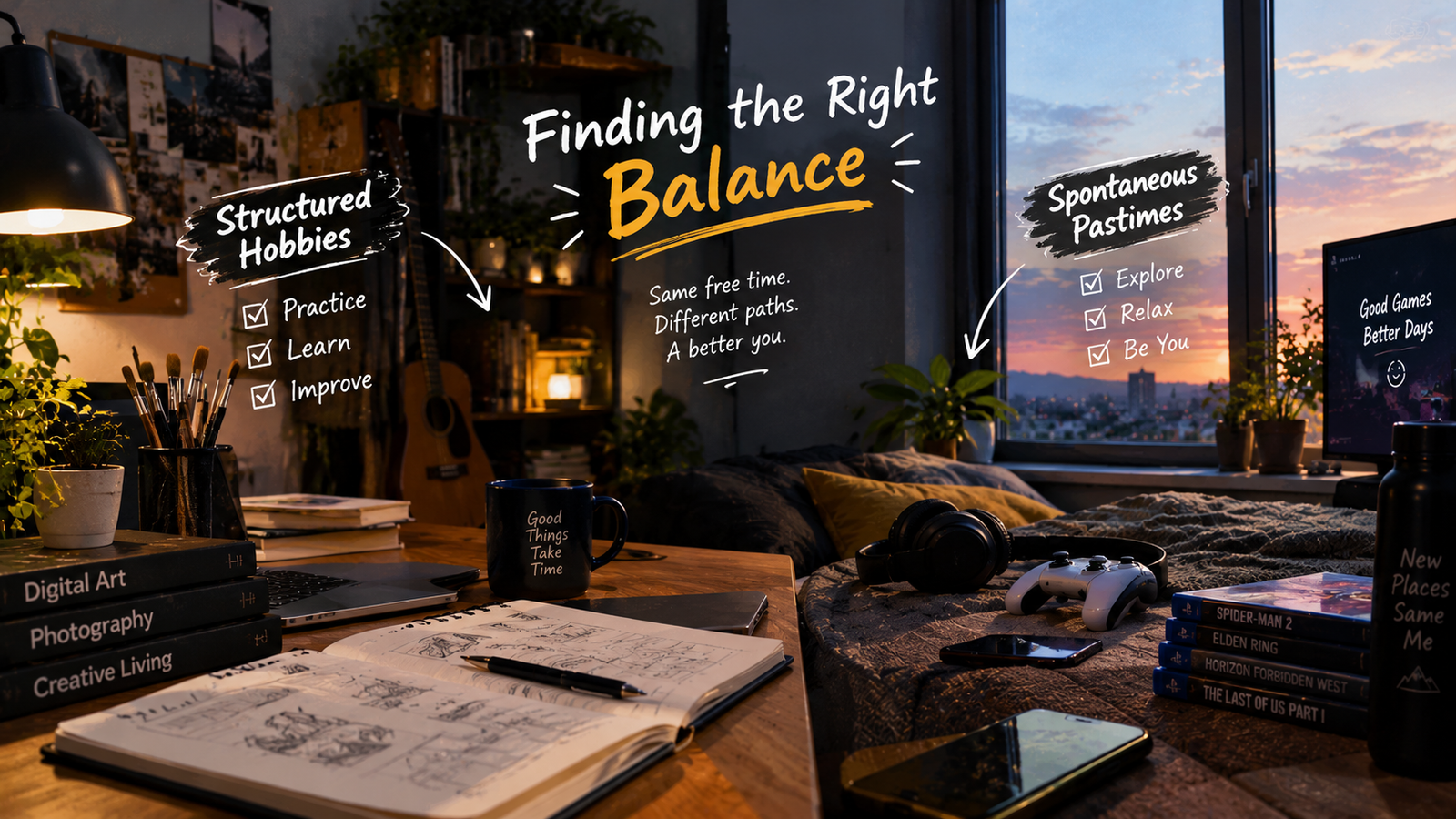
Off-hours habits shape the texture of a week. A planned drawing session can create a welcome return point after work, while an unplanned walk or game can suit the energy available that evening. Neither approach wins by default because each protects a different part of leisure.
Goal-oriented activities can fit into that mix without becoming the entire routine. A reader exploring How to make money in a day may be drawn to a short, defined challenge, then choose a quieter pastime later. The useful distinction is between setting a direction for free time and turning every spare hour into a task.
The case for a little structure
Structured hobbies have recurring sessions, planned practice, formal instruction, project sequences, or measurable progress. Their central advantage is simple: they reduce the number of decisions required to begin. Reserving an evening for music practice, cooking, or exercise gives an activity a place in the week without demanding a high-stakes outcome.
That pattern can support competence because progress is easier to notice when a person returns to the same activity. Clear boundaries and a defined next step may also reduce decision fatigue, though research does not establish that structured hobbies universally improve concentration. The American Psychological Association notes that pleasurable activities need not disappear during stressful periods and that consistent routines can provide useful structure.
Behavioral activation uses activity monitoring and scheduling to increase engagement with potentially rewarding or meaningful activities. That clinical practice supports the practical value of planning for follow-through, not a claim that an ordinary hobby calendar treats a mental-health condition. The best structure removes friction rather than adding pressure.
Freedom deserves room on the calendar
Spontaneous pastimes are selected in the moment with little advance commitment. Reading a few chapters, calling a friend, taking a walk, playing a game, or starting a small creative project can preserve autonomy when a rigid plan would feel draining. Self-determination theory identifies autonomy, competence, and relatedness as important needs that can support motivation.
Research on leisure scheduling adds an important caution. In reported studies, assigning an exact time to an enjoyable activity reduced anticipated and experienced enjoyment compared with a more spontaneous activity, potentially because leisure began to resemble an obligation. Rough planning did not produce the same negative effect, which makes a flexible time window a practical compromise.
Players can buy digital games through official platform stores or digital marketplaces. Eneba offers game keys or gift cards, and its product pages can show clear region and platform information for straightforward comparison. Browsing options can remain a deliberate choice without filling every open moment with a purchase or plan.
Build an off-hours portfolio
A balanced approach starts with one or two dependable hobbies and leaves open blocks for activities chosen on the day. A weekly class might sit beside an unscheduled evening for offline entertainment or gaming. This arrangement protects regular practice while allowing energy, mood, and social opportunities to guide part of the week.
Leisure activities are associated with psychological wellbeing, though much of the evidence is observational and cannot prove that hobbies directly cause better mental health. The aim is not to optimize every pastime. It is to create a mix that leaves room for progress, choice, and genuine recovery.
Digital marketplaces like Eneba offer deals on digital products, fitting neatly into this broader approach to intentional leisure. Comparing options before choosing a game or gift card can support a planned hobby, while leaving the decision itself open keeps free time feeling like your own.