
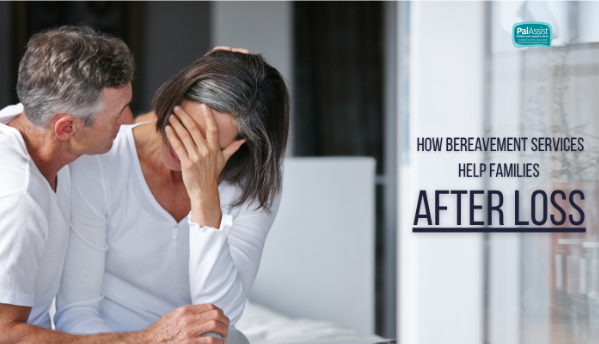
The days after losing a loved one can feel completely disorienting. After all, grief arrives differently for everyone, and the emotions that follow rarely move on a schedule.
Bereavement services exist to help families carry that weight. At PalAssist, we hear from families across Queensland every day who are carrying grief that feels too heavy to manage on their own.
We understand how overwhelming this time can be. That’s why this guide covers what’s available, what to expect, and how to find care that fits your situation. Read on to find the options that make sense for you and your family.
What Are Bereavement Services, and Who Can They Help?
Simply put, bereavement services are programs and resources designed to help anyone cope after losing someone close to them. They cover a wide range of support, from one-on-one counselling to community-based care, depending on what a person needs most.
These services aren’t limited to immediate family members. Carers, close friends, and others deeply affected by a death can access bereavement care too. And honestly, grief doesn’t sort people by relationship, and neither does the care built around it.
When you know what care is out there, reaching out becomes easier once the initial shock begins to settle.
Different Types of Bereavement Support for Grieving Families
There are several forms of support available to families, including counselling, support groups, and community-based programs. The one that suits your situation can determine how steadily you move through the grieving process.

So let’s walk through each one.
Bereavement Counselling: One-on-One Care for Your Grief
Bereavement counselling gives you a private space to talk through your feelings with a trained professional, at your own pace. For many people, just knowing there’s a dedicated hour each week to process grief and loss brings a sense of relief.
When you begin counselling, sessions typically focus on understanding your emotional responses instead of rushing you toward any particular outcome. Over time, they can also help you build coping mechanisms that carry you through difficult anniversaries, unexpected triggers, and the moments when loss feels closest.
Support Groups and Community Groups Close to Home
Bereavement support groups bring together people who are dealing with loss at the same time.
This creates something counselling alone can’t always offer: a shared sense of understanding. Knowing that others (parents, siblings, friends, or carers) have felt what you’re feeling right now carries its own kind of comfort.
Community groups often run specific programs for young individuals and children too, so the whole family can find age-appropriate peer support in one place. We’ve seen teenagers open up in group settings after weeks of silence at home. Sometimes a similar experience shared by a stranger reaches further than anything a loved one can say.
That said, finding the right care is only part of the picture. It also helps to understand what grief does to the body and mind, and why it can feel so all-consuming.
Grief and Loss: How It Affects Mental Health
Most people expect sadness after a loss, but experiencing grief affects the mind and body in ways many families don’t anticipate. What you’re feeling here isn’t just sadness. It’s a full-body response to losing someone who was part of your everyday life.
The toll it takes on mental health can show up here and there that seem unrelated at first (loss has a way of showing up in the body long before it shows up in words). But remember, no one moves through it the same way, and that’s completely normal.
Some common ways grief affects people include:
- Disrupted Sleep and Appetite: Sometimes the body reacts before the mind catches up. Because dealing with loss often interferes with basic daily functions, it exhausts the body and disrupts basic physical functions.
- Anxiety and Low Mood: Prolonged grief can develop into deeper mental health concerns, including depression and, in some cases, thoughts of suicide. That’s why reaching out to a professional early can protect your long-term well-being.
- Difficulty Coping at Work or Home: Those affected often push through their days despite feeling hollow inside. And as the weeks pass, concentration drops, relationships strain, and everyday tasks start to weigh heavier than they should.
- Physical Symptoms: Chest tightness, fatigue, and headaches are common physical responses to emotional pain, particularly among carers and first responders absorbing others’ pain alongside their own.
Self-care information and age-appropriate resources can make the process far less isolating for families supporting children through bereavement.
If you’re not sure where to start, PalAssist offers free phone support with registered nurses who can help point you toward the right care.
Online Forums and Loss Support: What to Expect
The truth is, not everyone can access in-person grief support straight away. After all, distance, timing, and personal circumstances all play a role. So online forums and digital resources have grown into a genuinely useful starting point for many bereaved families across Queensland.
Here’s a quick look at what different online options typically offer:
| Type | What It Offers | Best For |
| Online Forums | Peer connection, shared stories, community discussion | Those seeking lived experience and relatability |
| Grief Education Sites | Free information, articles, self-guided grief education | Independent learners building their own resources |
| Telephone Lines | Free telephone support, referrals, specialised care | Those needing immediate human contact by phone |
| Moderated Chat Services | Structured loss assistance with professional oversight | Anyone who needs more than peer-only spaces |
Keep in mind that online spaces vary widely in quality (not every online space is equipped to handle the weight of what grieving families bring to it). You can find free information easily online, but resources backed by grief professionals are worth seeking out specifically.
When you need to contact someone directly, phone-based support remains one of the most personal options outside a clinical setting. You can reach PalAssist by phone on 1800 772 273, seven days a week between 7 am and 7 pm.
Pro Tip: Be as open as you can when you first make contact. The more openly you share, the better they can match you with care that suits your specific situation.
Grief and Bereavement Care for Queensland Families
When you’re grieving in Queensland, you don’t have to look far to find bereavement services that understand what your family is going through.
For a starting point, Queensland Health connects bereaved families with palliative care services. Many of these teams keep in contact with those they serve through grief support calls, referrals, and check-ins in the months following a death.
Beyond that, community organisations across the state run free groups and advice sessions led by individuals trained specifically in understanding grief. Aboriginal and Torres Strait Islander families also have access to culturally grounded bereavement care through dedicated community groups.
Some organisations even run volunteer training programs to make sure bereaved families receive compassionate, hope-centred care wherever they live. And whatever stage of grief you’re in right now, it’s never too late to ask for help.
Your Loved One’s Memory Deserves Gentle Care
Grief doesn’t come with a deadline, and there’s no single perfect way to cope after losing someone you love. What helps most is having the right people beside you when grief starts to feel unmanageable.
A counsellor, a support group, or a phone line can each connect you with resources that bring steadiness to the weeks and months ahead. Here are a few ways to take that first step:
- Contact PalAssist for free, nurse-led support on 1800 772 273 (available seven days a week)
- Ask your GP for referrals to local bereavement services in your area
- Search for community grief support groups through Queensland Health
- Talk to a counsellor who specialises in bereavement care for customised guidance
Remember, bereavement care is there for the long haul, not just the first few weeks. If you’re ready to talk, PalAssist is ready to listen.